CONDITION:
TRACK TEMPERATURE: about 47°C
AIR TEMPERATURE: about 32°C
UMIDITY: 31%
WIND: S 2,0 m/s
LONG RUN ANALYSIS:
In this free practice session, among the top teams to record a race step was Verstappen with the middle, Russell and also seems to be Perez.
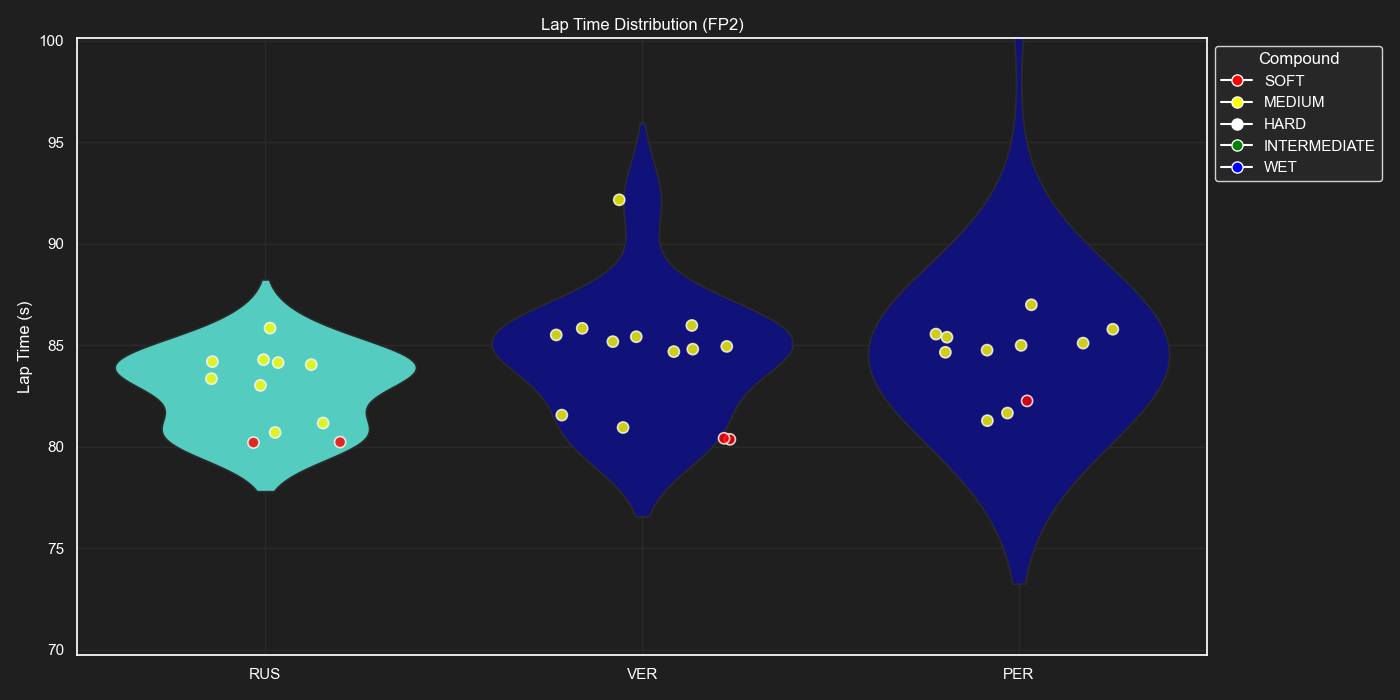
From the violin plot, we realize some things like constancy: Russell doesn’t seem to have had a very consistent race simulation session, perhaps because of the lack of balance, as he himself said in radio communications.
The most consistent seems to be Verstappen who has recorded times around 85s, minus his teammate, Perez.
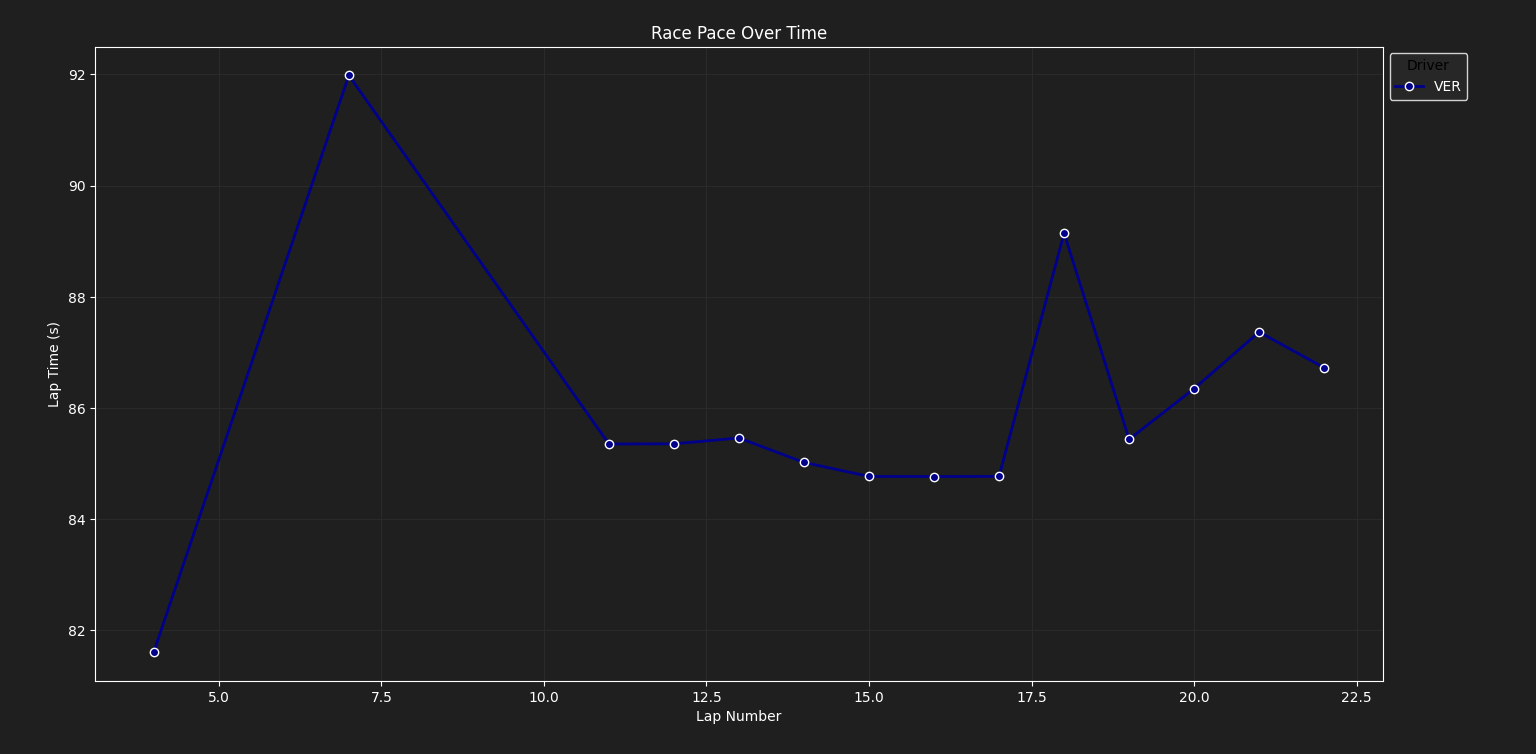
I only consider the Verstappen race step because Russell seems to have used the same way of managing long runs from Hamilton, or manage better at the beginning of the stint and then score the fastest laps at the end and it’s not the best way to analyze the degradation (at least for me).
So now let’s move to Verstappen: the first 7 laps are very similar between them, and run between 85s high and 85,5s, but after the 7th lap the degradation increases, recording a lap above 88s (a probable impeding) then down to a high 85s that gradually increases up to 87s high.
It should also be noted that the Verstappen medium used for the race simulation was 8 laps old, previously used for the qualifying simulation. But if we have to compare with the simulation of yesterday’s race, where Leclerc was driving with older tyres (10L) with a pitch of 85.61 (less aggressive PU mode than today) and who suffered the phenomenon of graining, Verstappen’s degradation may be a little high.
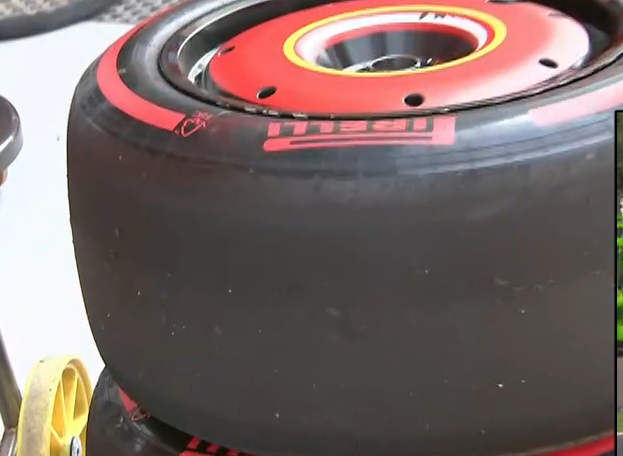
Ferrari’s graining that seems to be improved following the several qualifying simulations taking place today, a factor that may have helped the Italian team is the continuous increase in grip of the circuit, which helps teams to slide less in corners and reduce the graining and degradation of the tyre a little.
Therefore the deterioration of the Verstappen tyre could be worrying for the Austrian team. But you will see it all in the race!
BALANCING ISSUES FOR RED BULL AND MERCEDES:
For sure the deterioration of the tyres of the Red Bull are not the only problem of the Austrian team, in fact there is still that annoying understeer that is persecuting the Dutch and Mexican driver.
During these test sessions, Red Bull has tried several times to make changes to the front end of the RB20, but without much success, this shows the small window of operation of the last car of the Austrian team following various updates (although Verstappen is using the old floor).
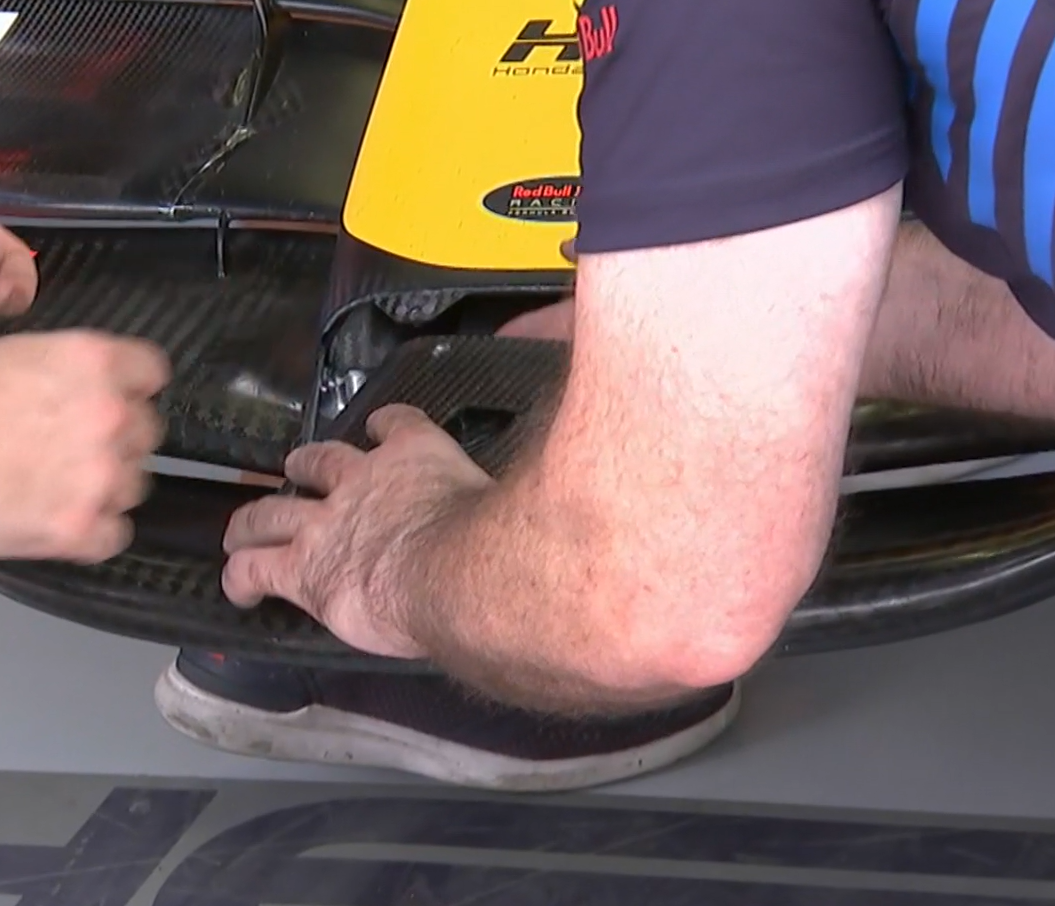
Red Bull’s staff were forced to place ballast at the top of the front wing, to help the drivers better fit into the corners. But at the moment we do not know if there is a positive response, even if Perez last complained about the vibration of the wheels.
For the Mercedes, instead, there is Russell who after a good lap actually complains about the balance of the car and as if it was something else than what he wanted. For the rest he complains about the car’s instability in turn 7 (Lesmo 2), probably related to the exit phase.
ANALYSIS OF THE QUALIFICATION SIMULATION:
Among the top teams focusing on qualifying simulation were McLaren and Ferrari, with the addition of Hamilton:
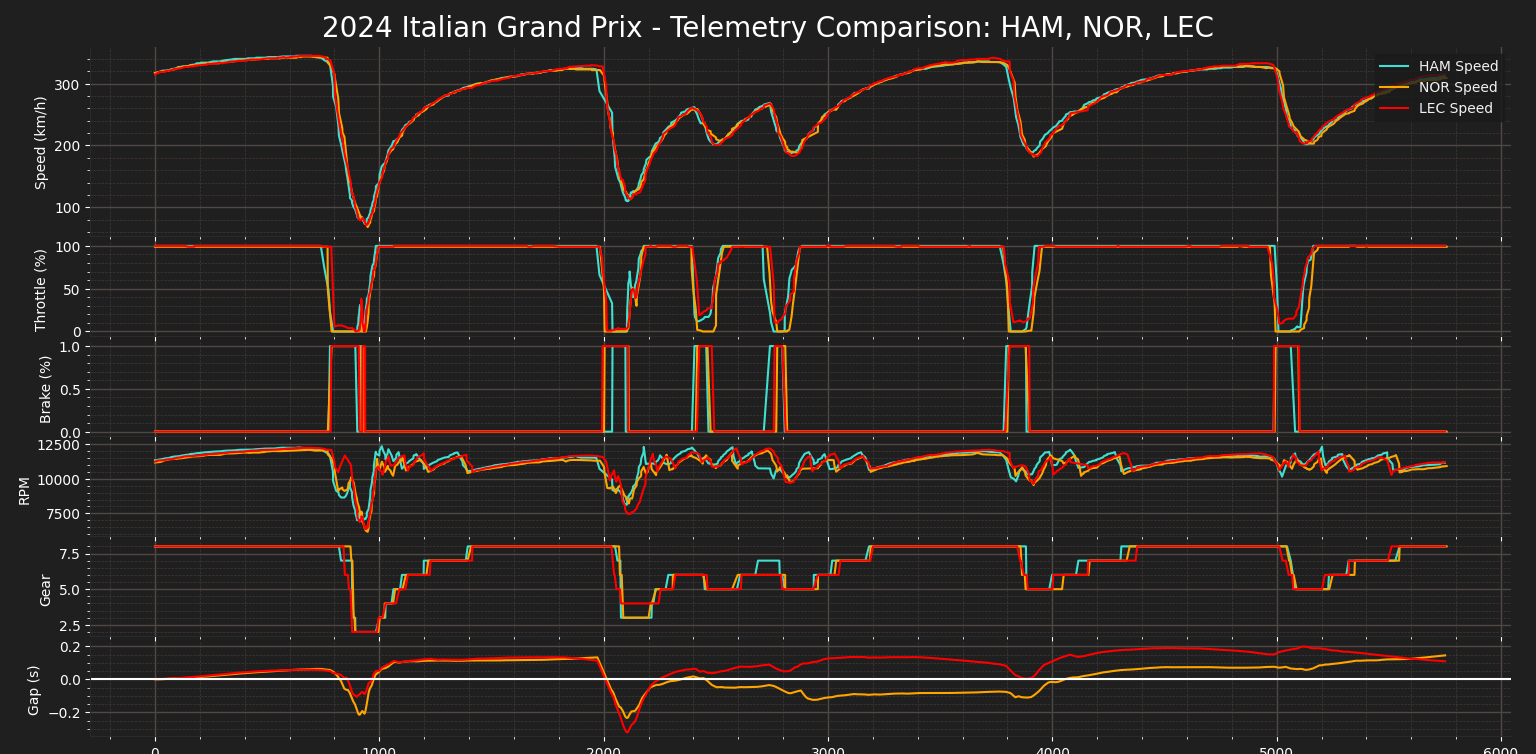
Yesterday we started talking about the simulations in qualifying and we noticed how Leclerc and Norris optimize the traction in the exit, unlike the 7 times world champion who instead has a setup that optimizes the speed in entry but to the detriment of the exit
Now we will see if there are any changes:
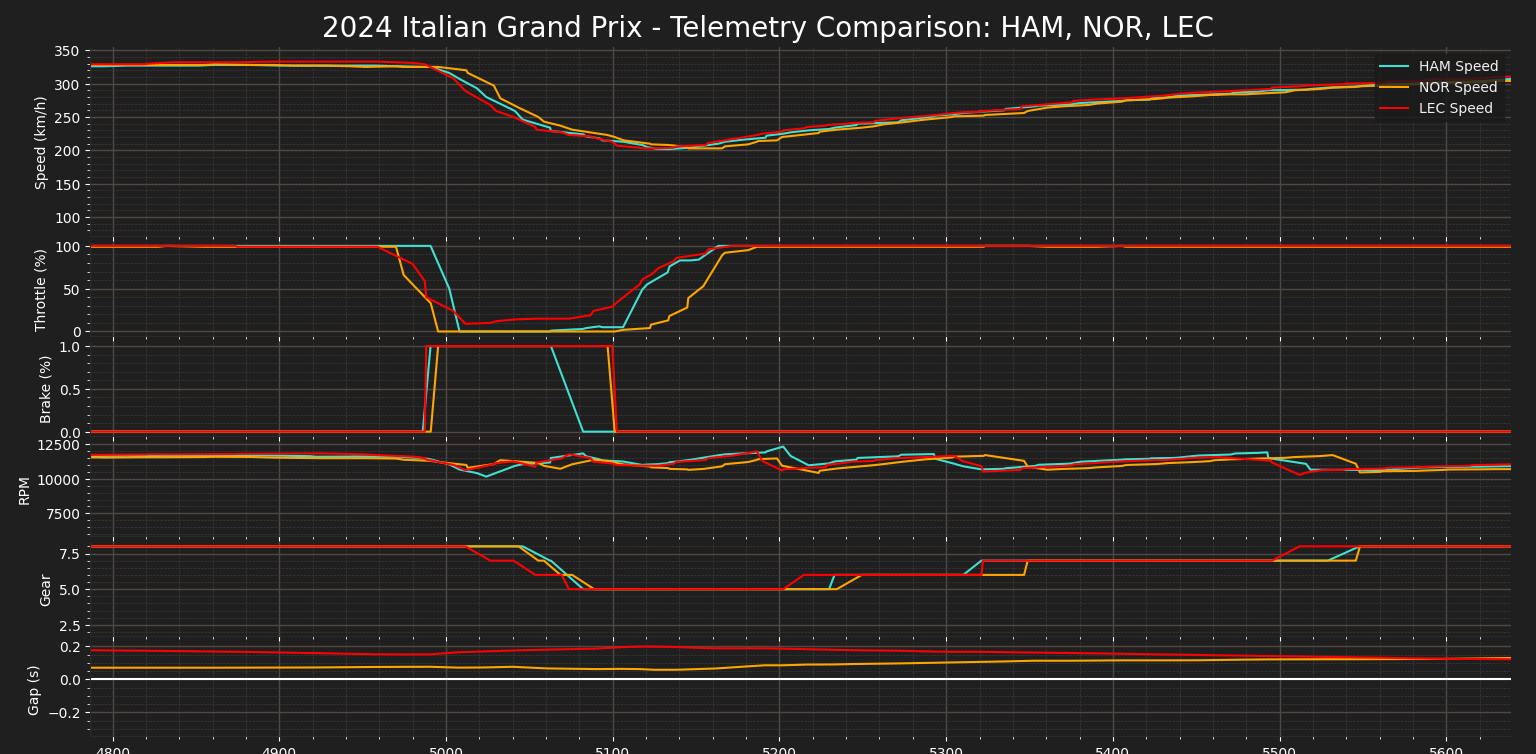
The first thing that catches my eye at first sight is that Norris has changed his approach to parabolic, this time he prefers to sacrifice entry, slowing down more or less to the same point as Leclerc but braking later. Unlike the previous session, where it sacrifices a lot of input to optimize output traction.
Leclerc with his Ferrari slows down more progressively, but he is aggressive with the brake, and this allows him to have an excellent traction in exit (and not a little) compared to McLaren with the n°4.
Hamilton we have already said that he has another type of setup, which prefers a higher speed in the input than the output, but in this case, it has better traction than Norris. This could be either a difficulty of the driver or the car itself to face the parabolic (turn 11).
Note how Hamilton takes it: brakes and slows at the same time, then raises his foot completely from the accelerator, but manages to hold the brake for less time.
For the rest I do not think there are other differences, in case I can notice more I will inform you on social networks, thanks for reading!
Commenti
Posta un commento