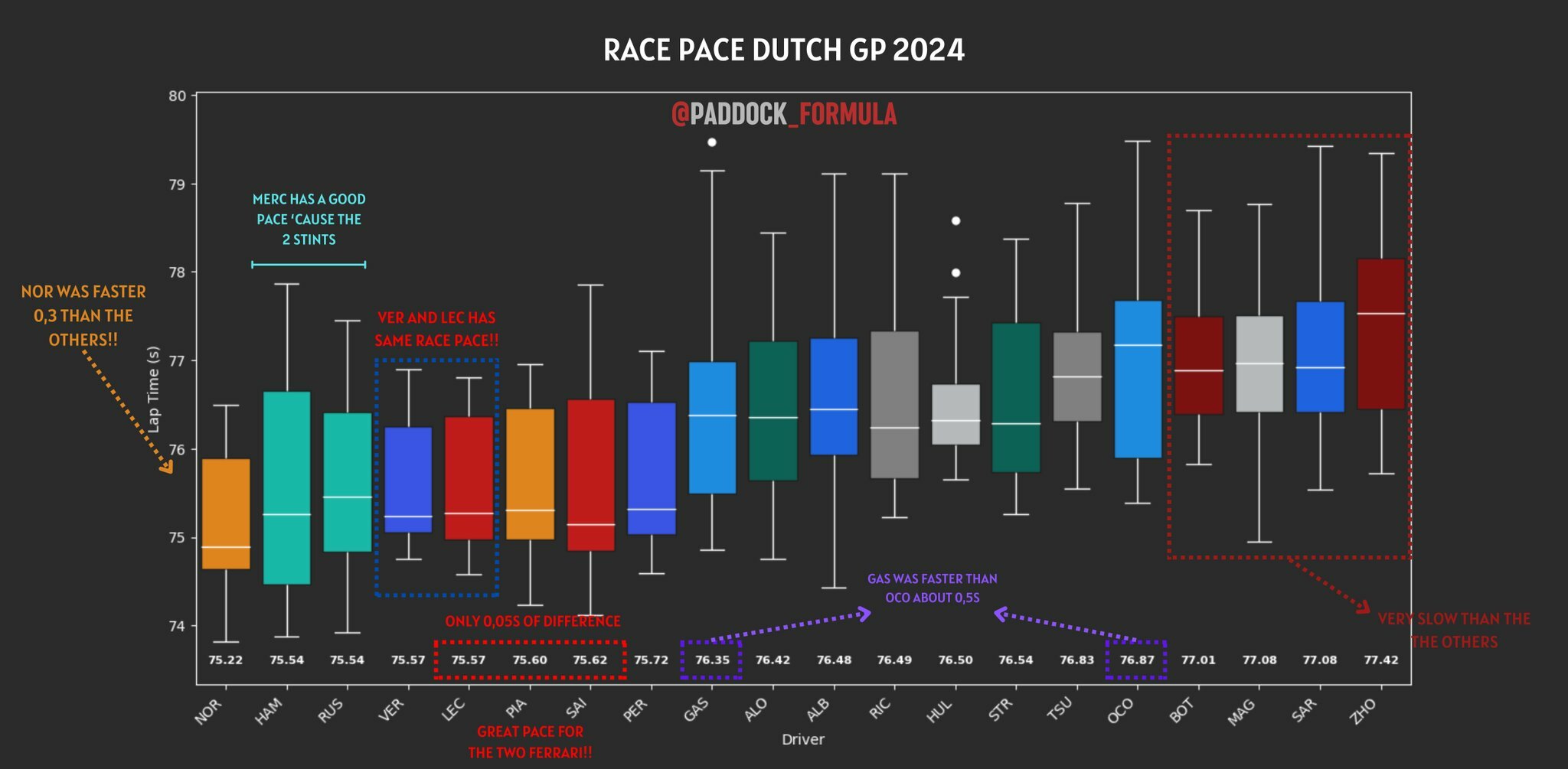
 Race pace analysis of Dutch GP:
▶️ Norris was about 0.3s faster than the others top team
▶️ Leclerc has the same race pace of Verstappen ane was better than Piastri
▶️ Mercedes even if he has a good race peace he disappointed
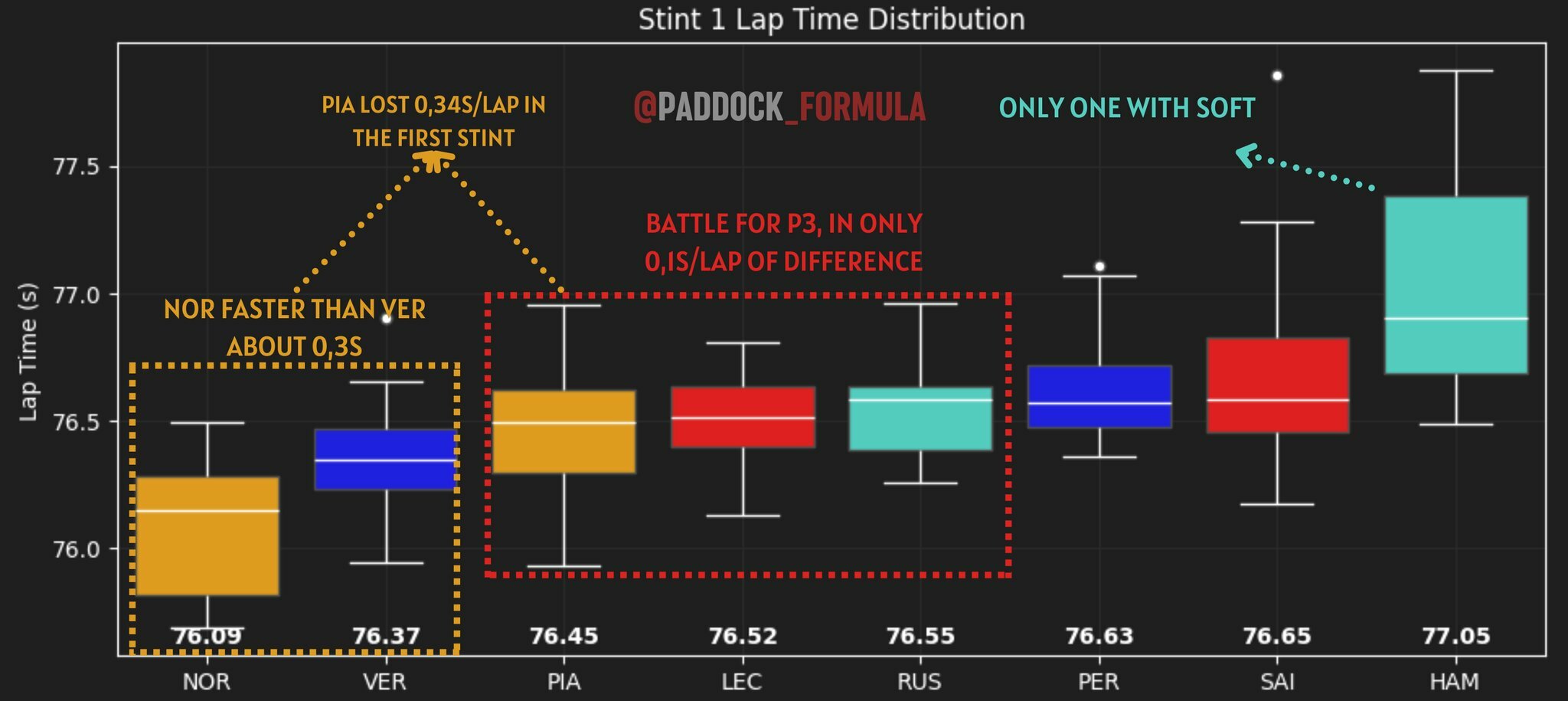
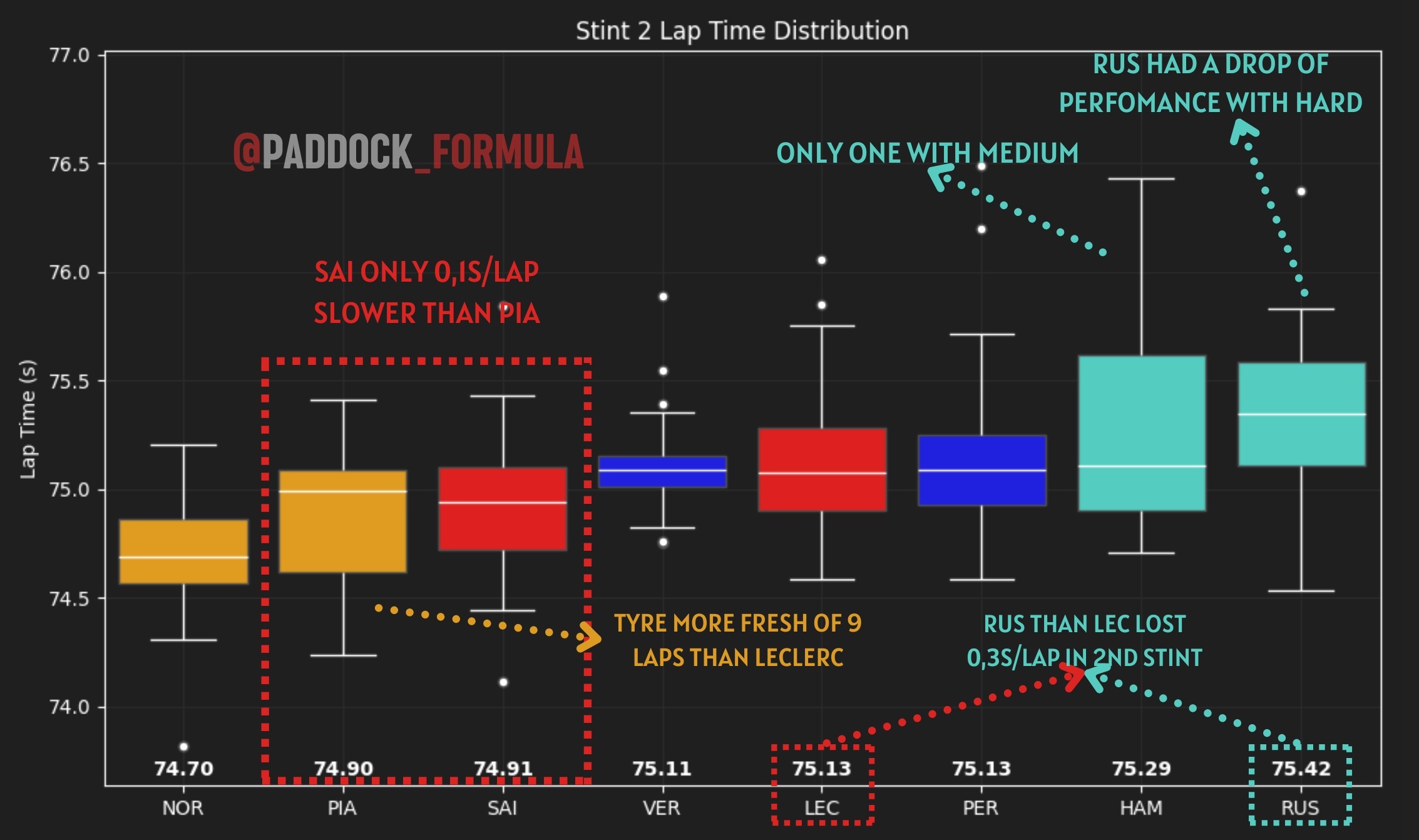
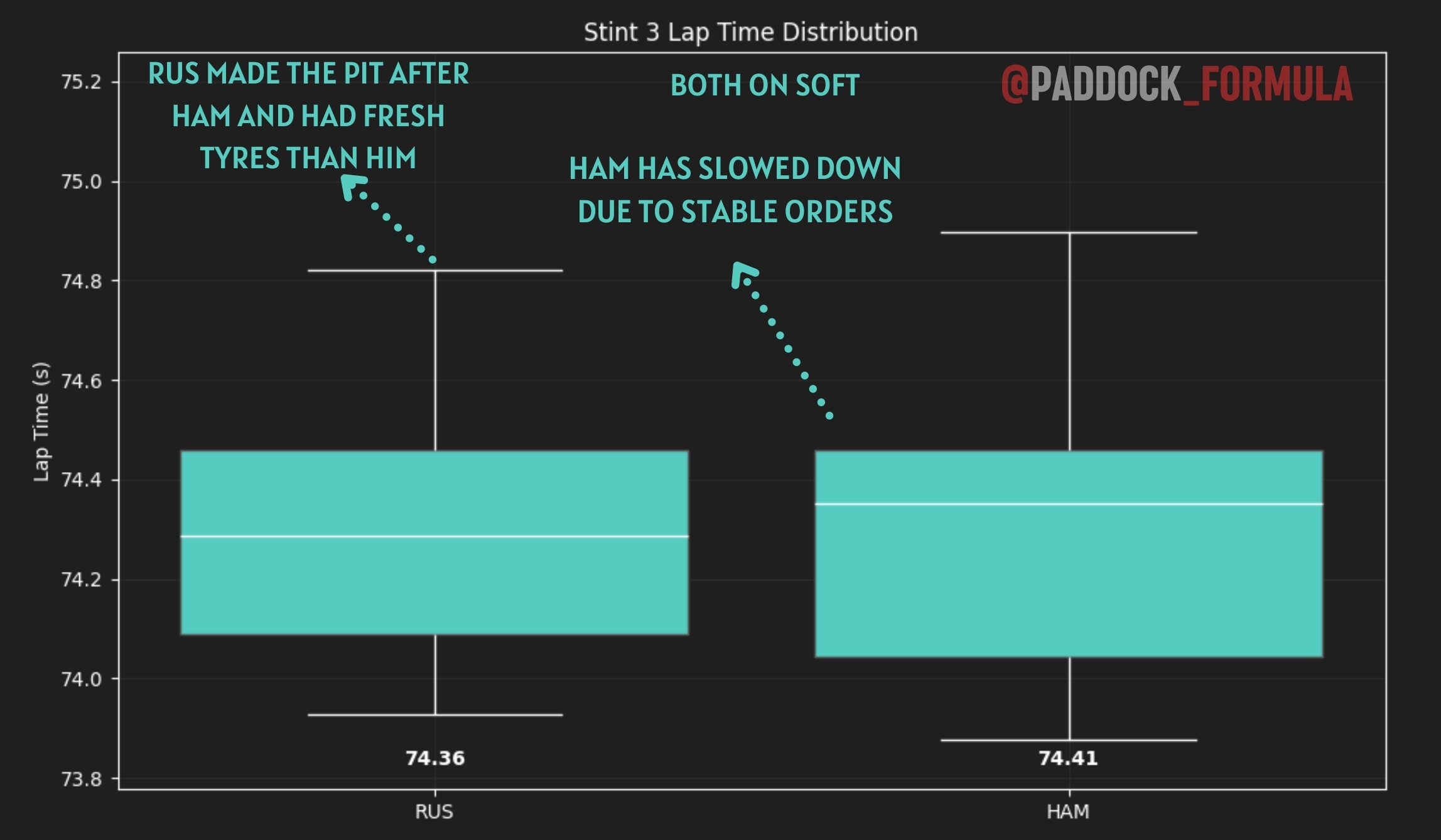
Analysis of Dutch GP stints:
▶️ Norris was faster than other in both stint
▶️ Verstappen lost 0.3s/lap in 1st stint and 0.4 s/lap than Nor
▶️ Ferrari had a great pace, in particular Sainz was slower for only 0,1s/lap than Piastri
Mercedes unlike Ferrari surprised in a disappointing way. Russell in particular suffered a not indifferent heat of performance.
W15 itself is very sensitive to changes (such as temperature) . At Dutch GP it was more so.
Particularly for Russell, who was haunted by the lack of grip and slippage of the car. It suffered from oversteer in the first stint, while in the second it suffered from understeer.
At the moment Toto Wolff does not blame the new floor, so we should see for Monza
However, Mercedes has not been very constant in the various stints.
Unlike Verstappen, which records a considerable consistency considering the problems of oversteer and understeer that occurred in the race.
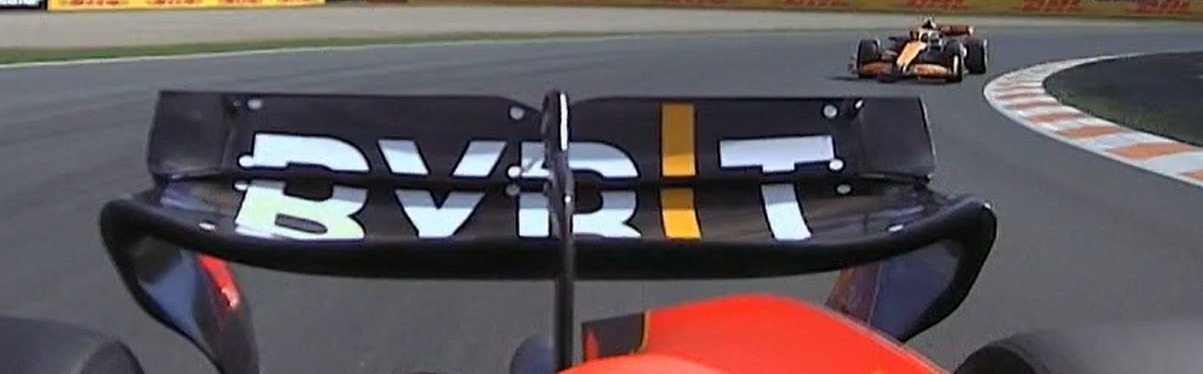
Even for Verstappen and the Red Bull it was not a very good weekend, we start from the wrong choice of the RW, moving to a higher load. The choice was based on the few data obtained in FP2, observing a high degradation, but which manifested itself in a different way in the race.
The degradation in the race was lower, and the choice of an RW with more under-laden load on the EOSS (which should have been a strong point of the Red Bull), But it just allowed Norris to overtake him faster on the straights.
A higher load configuration at the rear shifts the balance to the rear-end, alleviating the front-end and becoming more subject to incoming understeer.
It was therefore a gamble that did not work.
There was also a shortage of grips haunting Verstappen, which like Russell suffered various problems with stability, as the car sled a lot.
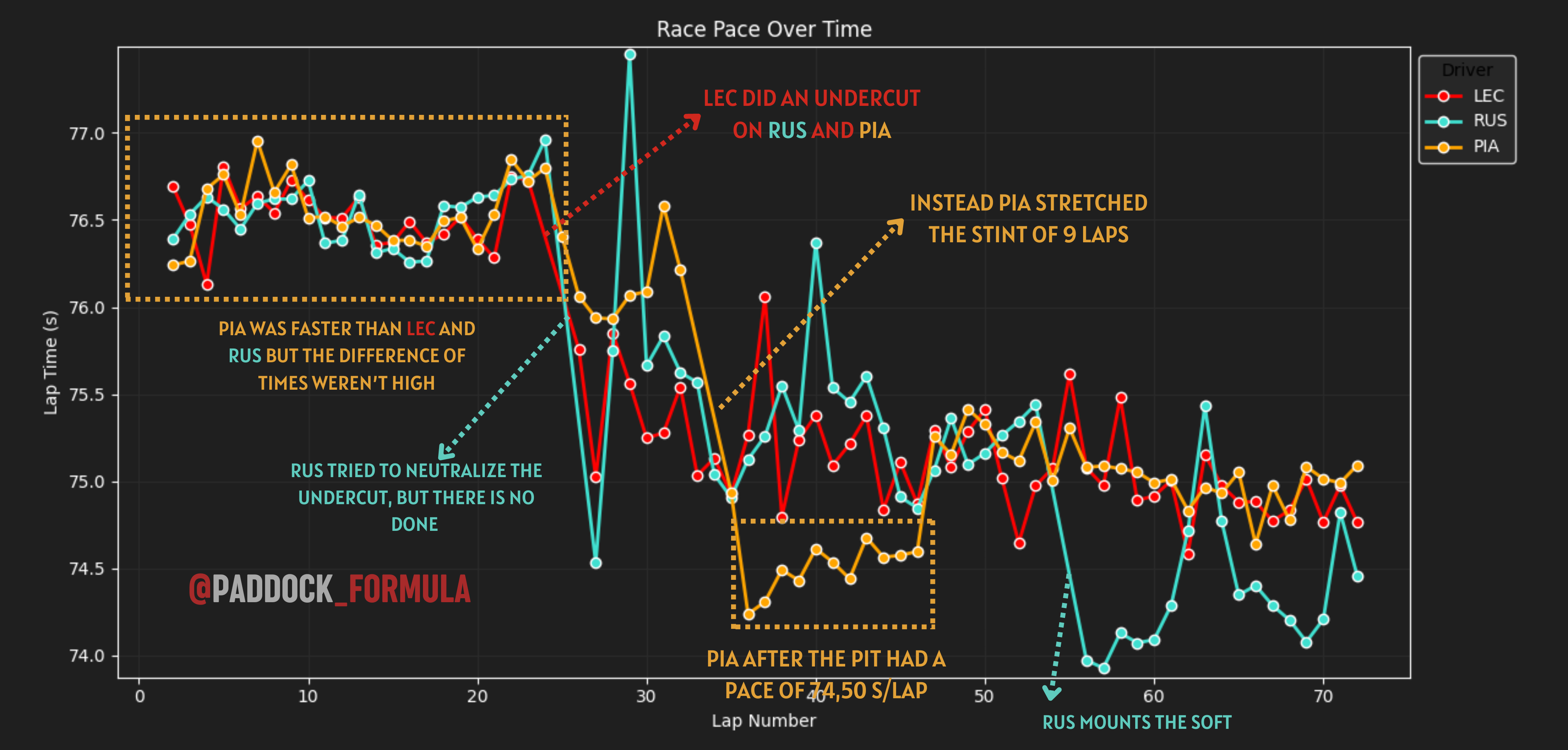
Analysis of the race of Leclerc v Piastri v Russell:
▶️ Lec's undercut was important to get the podium.
▶️ Rus after the 1st pit lost 0.3 s/lap than Lec
▶️ Pia to preserve the tyres did not attack Lec at the end
Looking at the previous graphs as well, we see how Piastri was slightly faster in the first stint, but the rhythm was similar, the slightly worse was that of Russell, who in fact failed to create an important gap at the beginning.
The cards on the table change with the beginning of the first pit stops. From Leclerc's radio comes a message "Box opposite Piastri" And that's the message that "guaranteed" the podium.
Leclerc will therefore make an undercut not only on Piastri, but also on Russell.
Russell tries to neutralize Lec's pit, but he can't, but he doesn't, and he starts a series of laps that make him lose 0.3s/lap compared to Leclerc.
Rus was already suffering in the first stint of the car's slippage, a clear sign that Rus' Mercedes had no grip.
And the Hards are not the right choice for a car that lacks grip. So the situation gets worse, and it's almost reached by #Sainz, but the team will decide to mount the red ones trying to recover at least on #Perez. But it won't succeed.
Piastri decides to respond to the Leclerc pit with an overcut, and as soon as he does the pit, he will have a scary rhythm, recovering 0.7 s/lap compared to Lec and 0.85s/lap on Russell
But even with fresher tyres, Piastri eventually fails to overtake Leclerc (who was reaching Verstappen in the meantime) . In addition to thanking the characteristics of the circuit that limit overtaking, it seems that in the end Pia had given up on attacking Lec to preserve the tyres, in fact it seems that Mclaren has experienced a greater degradation than Ferrari.
Leclerc and for Ferrari it was a very good race, but during the race there were still some balance problems (not as important as in previous sessions) .
In particular, he had problems with incoming substeer and outgoing supersteer, especially this one in Turn 10.
And further rotation problems, mainly in that curve, received several indications, such as increasing braking with the engine brake and etc
Commenti
Posta un commento